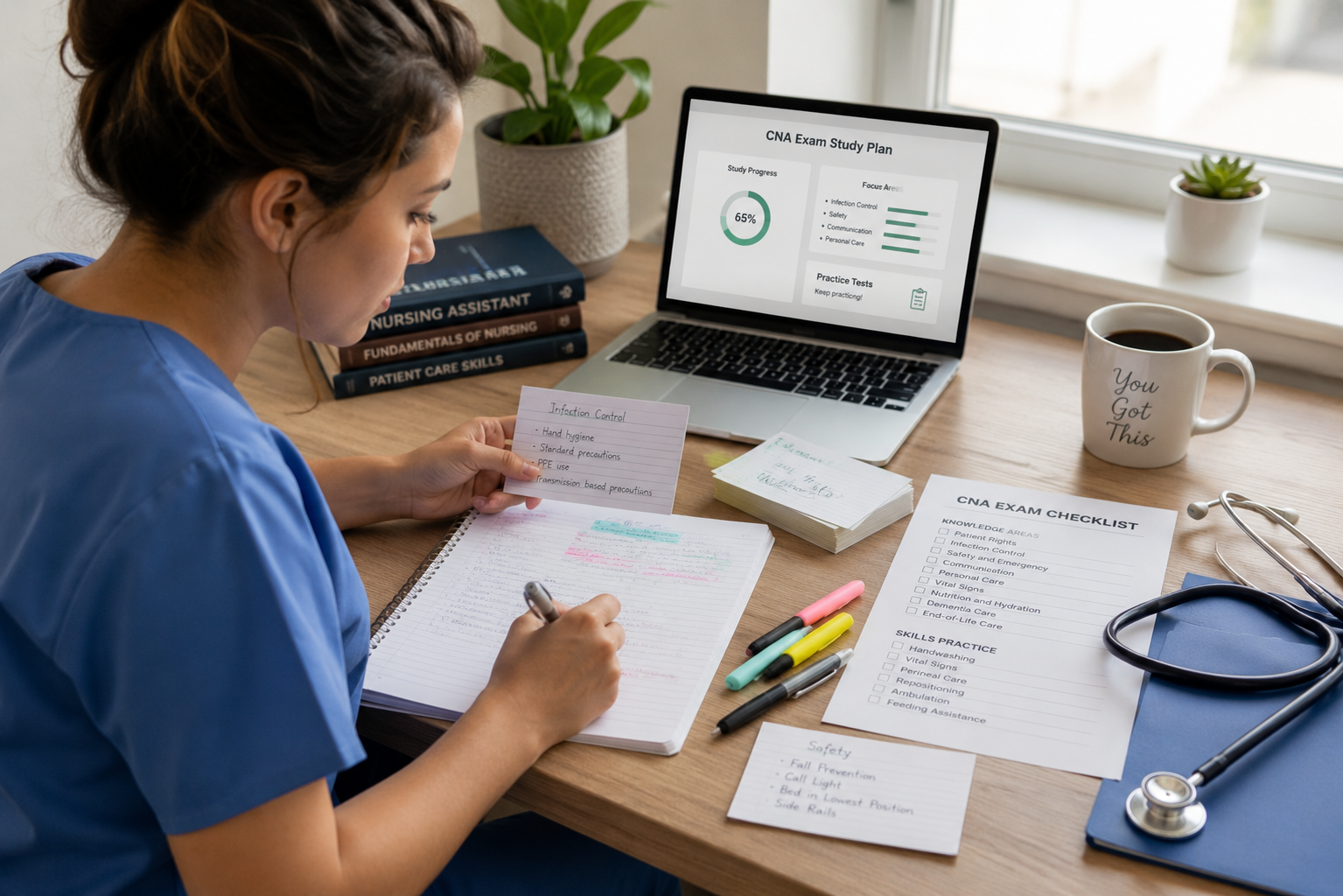
Technical training is essential for caregiving — but the caregivers who truly excel are those who combine clinical knowledge with human qualities that go beyond what any textbook can teach.
Whether you’re preparing for your first role or looking to grow professionally, understanding which skills matter most — and how to develop them — gives you a clear edge in a competitive and deeply meaningful field.
QUICK ANSWER
| The most important caregiver skills in 2026 include empathy and patience, communication, physical stamina, attention to detail, reliability, basic medical knowledge (vital signs, infection control, first aid), and cultural competence. Both technical (clinical) skills and interpersonal (soft) skills are essential for effective, safe, and compassionate patient care. |
Based on caregiver job postings, direct care workforce research from PHI, and Bureau of Labor Statistics occupational data for home health and personal care aides, these are the skills most consistently prioritized across home care agencies, nursing facilities, and private clients:
| Technical (clinical) skills | Soft (interpersonal) skills |
| Vital signs monitoring (BP, pulse, temp, O2) | Empathy and genuine compassion |
| Infection control and PPE use | Patience and emotional resilience |
| Safe patient transfers and repositioning | Active listening and communication |
| Medication reminders and documentation | Cultural sensitivity and respect |
| Personal care techniques (bathing, grooming) | Reliability and personal accountability |
| Basic first aid and CPR | Problem-solving and adaptability |
| Nutritional support and meal preparation | Teamwork and professional collaboration |
| Accurate health observation and reporting | Attention to detail and follow-through |
The most effective caregivers excel in both columns. Technical skills keep clients safe; soft skills make them feel valued, heard, and respected. If you’re still weighing which path fits you best, our breakdown of CNA vs HHA vs PCA roles shows how these skill sets apply across each direct care position.
The fastest and most structured way to build caregiver skills is through a formal training program that covers both theoretical knowledge and practical application. NCOOA’s online certification courses are specifically designed to develop all core technical competencies needed for PCA, HHA, CNA, DCW, and PCW roles.
Beyond formal training, additional strategies for building caregiving skills include:
NCOOA’s full suite of online programs is available at ncooa.com/nursing-courses/. All programs include 1-year access and unlimited exam retakes.
The skills you develop as a PCA or HHA don’t just serve your current role — they are the foundation for a long and rewarding healthcare career:
Many CNAs, LPNs, and even RNs began their careers as PCAs or HHAs. The skills you build now form the foundation of everything that comes next.
Essential skills include empathy, patience, communication, physical stamina, reliability, attention to detail, and basic medical knowledge including vitals, infection control, and first aid. NCOOA’s training programs build all the technical skills; the human qualities grow with dedication and experience.
Compassion, reliability, and communication consistently top lists from both employers and clients. Clients depend on caregivers not just for physical safety but for dignity, connection, and trust.
No prior medical background is required to enter caregiving. NCOOA’s online courses are designed for beginners and build all required medical knowledge progressively from the ground up.
HHAs need proficiency in vital signs monitoring, safe patient transfers, personal care techniques, medication reminders, infection control practices, basic observation and documentation, and accurate reporting. All of these are covered in NCOOA’s HHA Online Course.
Yes. NCOOA’s online programs teach all core technical caregiving skills through structured coursework and competency exams. Visit ncooa.com/nursing-courses/ to explore all available programs.
The clinical observation, documentation, communication, and patient advocacy skills developed as a direct care worker are directly transferable to LPN, RN, care coordinator, and supervisory roles. Many nurses began their careers as CNAs or HHAs.
The caregivers who make the greatest difference — and who build the strongest careers — are those who invest consistently in both their technical knowledge and their human skills. This career rewards both equally.
NCOOA’s online certification programs are the fastest, most affordable way to build the technical foundation. The compassion, dedication, and reliability? You bring those with you.
A career as a home health aide offers steady employment, genuine purpose, and a clear entry point into the broader healthcare field. With online training through NCOOA, you can earn your certification on your own schedule.