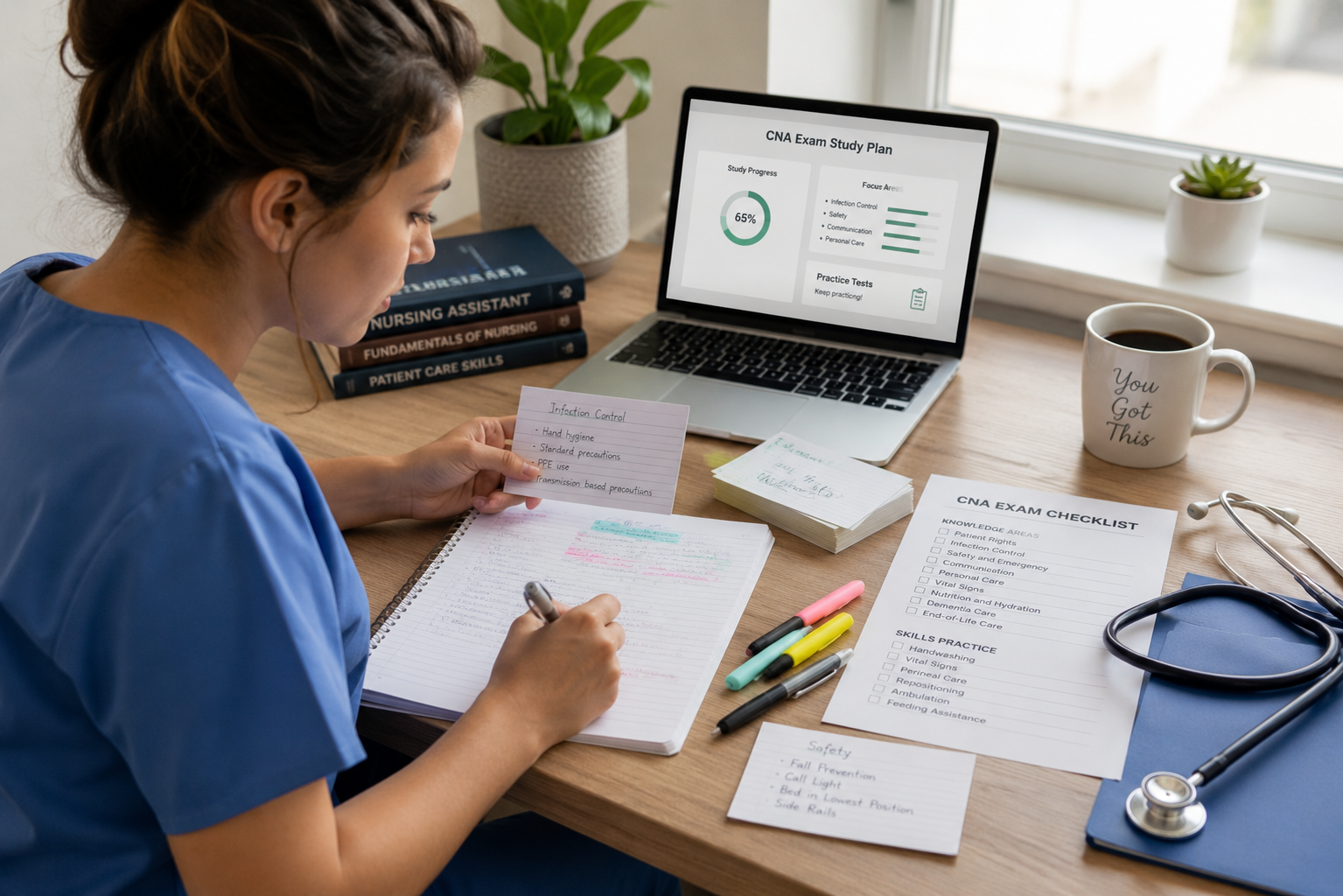
If you’re looking for a fast, rewarding way to start a career in healthcare, becoming a Patient Care Assistant (PCA) might be the best move you can make right now. PCAs, sometimes known as Home Care Givers or Personal Care Assistants, are the backbone of patient support — helping individuals live safely, comfortably, and with dignity every day.
Whether you’re exploring a new career path or looking to grow your experience in healthcare, the demand for PCA professionals is at an all-time high. The good news? You can become certified quickly, and start changing lives — including your own — in a matter of weeks.
A Patient Care Assistant provides hands-on support for patients in hospitals, nursing homes, or home care settings. They help clients with essential daily activities and serve as a vital link between the patient and medical staff.
Typical PCA responsibilities include:
In short, PCAs ensure patients receive personalized, compassionate care every day — the kind of care that makes the healthcare system work at its best.
The demand for Patient Care Assistants is exploding across the country. With an aging population and a growing need for home-based healthcare services, hospitals and private care agencies are hiring PCAs faster than almost any other healthcare position.
According to the U.S. Bureau of Labor Statistics, the need for healthcare support roles (including PCAs, HHAs, and CNAs) is projected to grow much faster than the national average over the next decade. That means steady job opportunities, competitive pay, and long-term stability for anyone who enters the field now.
In many ways, this is the perfect time to get started.
Becoming a Patient Care Assistant doesn’t require years of college or expensive degrees. You can complete your PCA training and certification through an accredited online or hybrid program designed to get you job-ready fast.
Here’s how the process usually works:
This program cover essential topics such as patient care, safety, infection control, communication, and basic anatomy. Many schools, like National Caregiver Organization, offer flexible online PCA courses that let you study at your own pace.
During your training, you’ll learn how to assist with daily living activities, maintain patient dignity, and support nurses in delivering quality care. You’ll also study patient rights, ethics, and emergency response procedures — giving you the confidence to handle real-world situations.
Some states require a small number of in-person training hours or supervised clinical practice. These sessions help you apply your classroom knowledge in a real care setting.
After training, you’ll complete a PCA competency exam to demonstrate your skills. The test may include both written and practical sections, depending on your state’s regulations.
Once you’ve passed your exam, you’ll receive your Patient Care Assistant certification, which may allow you to start applying for positions in hospitals, clinics, and home health agencies right away.
That’s it — no long degree programs, no four-year commitment. Just a few weeks of focused training and you’re ready to begin your healthcare career.
PCA programs are designed to give you everything you need to succeed in the field. A typical curriculum includes:
By the end of your training, you’ll have both the technical skills and the compassion that define great caregivers.
In most cases, you can become a certified Patient Care Assistant in 4 to 8 weeks — depending on your program’s structure and schedule. Online PCA courses allow you to move faster or slower depending on your availability, making them ideal for working adults or those switching careers.
This short timeline means you can transition into the healthcare field almost immediately, giving you both stability and purpose sooner than you might expect.
Patient Care Assistants are needed in nearly every healthcare setting. Some of the most common include:
The versatility of the role means you can find a work environment that fits your lifestyle and preferences.
You can start working in the healthcare industry quickly — often within a few weeks of enrolling in your training.
The demand for PCAs continues to grow nationwide, offering consistent work opportunities and career longevity.
Many PCA positions offer flexible hours, part-time or full-time options, and a variety of shifts to fit your schedule.
As a Home Care Giver, you’ll directly improve people’s lives every day — helping patients maintain independence, comfort, and dignity.
Becoming a PCA can also be a stepping stone to higher healthcare roles like Certified Nursing Assistant (CNA), Licensed Practical Nurse (LPN), or even Registered Nurse (RN).
Salaries vary by state, experience, and employer type. On average, Patient Care Assistants earn between $30,000 and $45,000 per year, with potential for higher wages in hospital or specialty care roles. Experienced PCAs who gain additional certifications can earn even more.
Many employers also offer health benefits, paid time off, and tuition reimbursement, making the PCA role not only personally fulfilling but financially practical as well.
The U.S. healthcare system is evolving rapidly. As hospitals and families seek more personalized, at-home care, the role of the Patient Care Assistant has never been more vital. The combination of high demand, quick certification, and long-term career growth makes this one of the most valuable opportunities today.
If you’re ready to start a meaningful career that makes a difference, becoming a PCA is the fastest and most effective way to begin your healthcare journey.
At National Caregiver Organization, we make it simple to become a certified Patient Care Assistant through flexible online learning and real-world preparation. Our programs are designed for busy adults who want to enter healthcare quickly and confidently.
Enroll today and take the first step toward a stable, compassionate, and rewarding career as a Patient Care Assistant (PCA).
A career as a home health aide offers steady employment, genuine purpose, and a clear entry point into the broader healthcare field. With online training through NCOOA, you can earn your certification on your own schedule.