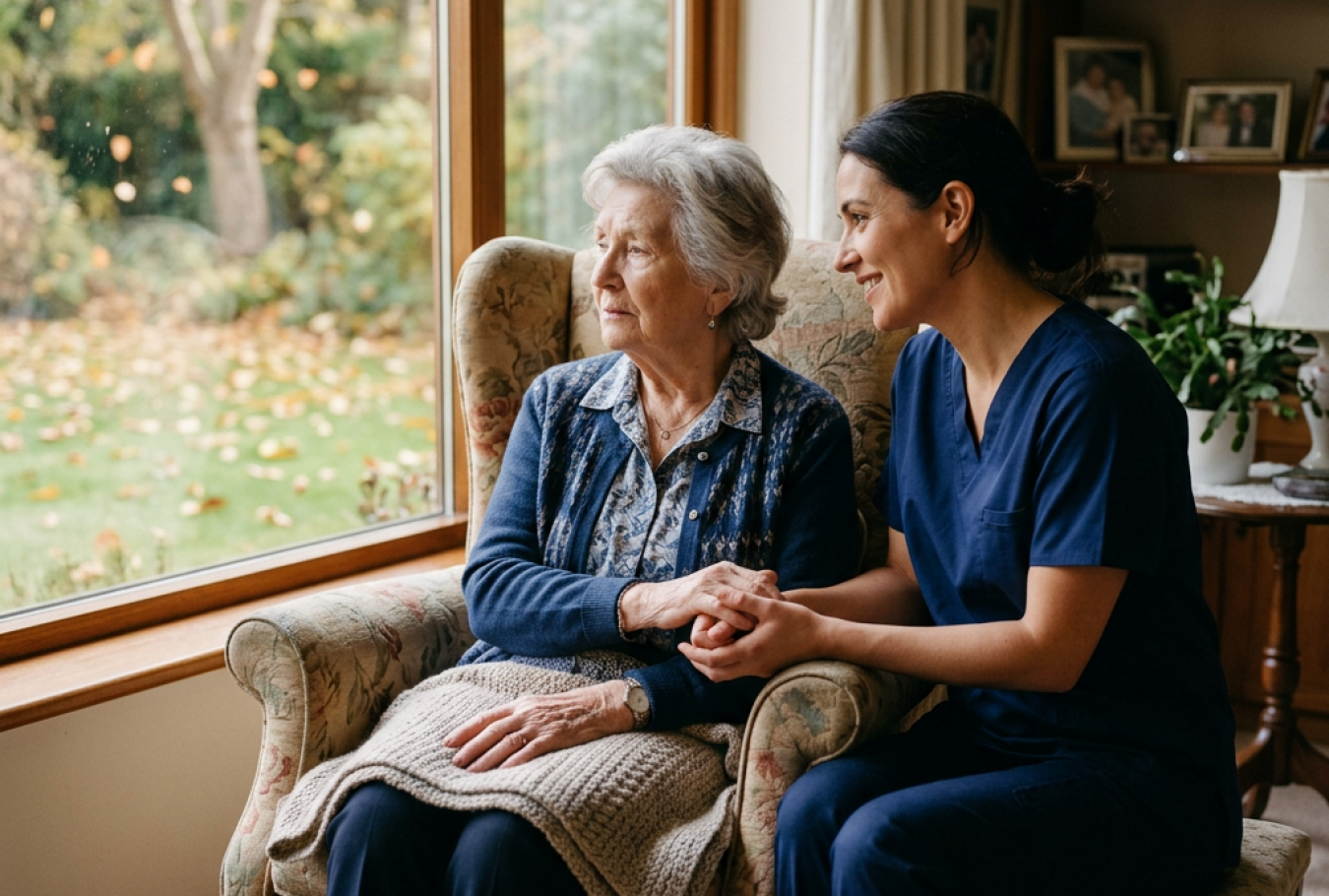
Social isolation is one of the most underrecognized health risks facing older Americans. It is not simply a social problem. It is a clinical one. Research has linked social isolation in older adults to a 50 percent increased risk of dementia, higher rates of depression and anxiety, significantly elevated cardiovascular risk, and premature death at rates comparable to smoking 15 cigarettes a day.
For home health aides, personal care aides, and family caregivers, recognizing and addressing social isolation is as much a part of quality care as any clinical task.
Social isolation in elderly adults refers to the objective lack of social contact and meaningful relationships. It is distinct from loneliness, which is the subjective feeling of being alone. A person can be socially isolated without feeling lonely (particularly in early dementia), or they can feel lonely despite having social contacts. Both states carry significant health risks. Caregivers are often the first to notice either condition in an older adult living at home.
Behavioral signs:
Physical and cognitive signs:
Environmental signs:
The clinical evidence on the health impacts of social isolation in older adults is extensive and consistent:
The mechanisms are multiple: isolated older adults are less likely to maintain healthy behaviors, less likely to seek medical care, more likely to experience depression that affects physical health, and less likely to have someone notice warning signs of health deterioration.
During visits: maximize social engagement
Help maintain and rebuild social connections
Connect the person with community resources
Observe and report
What is the most common cause of social isolation in older adults?
The most common causes include loss of a spouse or close friends, reduced mobility that limits getting out, loss of driving ability, hearing or vision impairment that makes communication harder, and retirement or leaving a community that provided regular social contact. Multiple losses often compound over time.
Is social isolation the same as loneliness?
No. Social isolation is an objective measure of social contact. Loneliness is a subjective feeling of inadequate connection. Some people are objectively isolated but not subjectively lonely (they have adapted); others have social contact but still feel profoundly lonely. Both states require attention from caregivers.
How can a caregiver help an isolated person who refuses social engagement?
Forced social engagement is counterproductive. Instead, focus on building genuine one-on-one connection during your own visits, gradually introducing low-pressure social ideas rather than structured activities, and exploring what types of connection the person values and would be open to. Report the pattern to the care team so it can be addressed in the care plan.
Social engagement is not an extra. It is a clinical priority. NCOOA’s caregiver training prepares home health aides and personal care aides to provide care that genuinely encompasses the whole person.
A career as a home health aide offers steady employment, genuine purpose, and a clear entry point into the broader healthcare field. With online training through NCOOA, you can earn your certification on your own schedule.