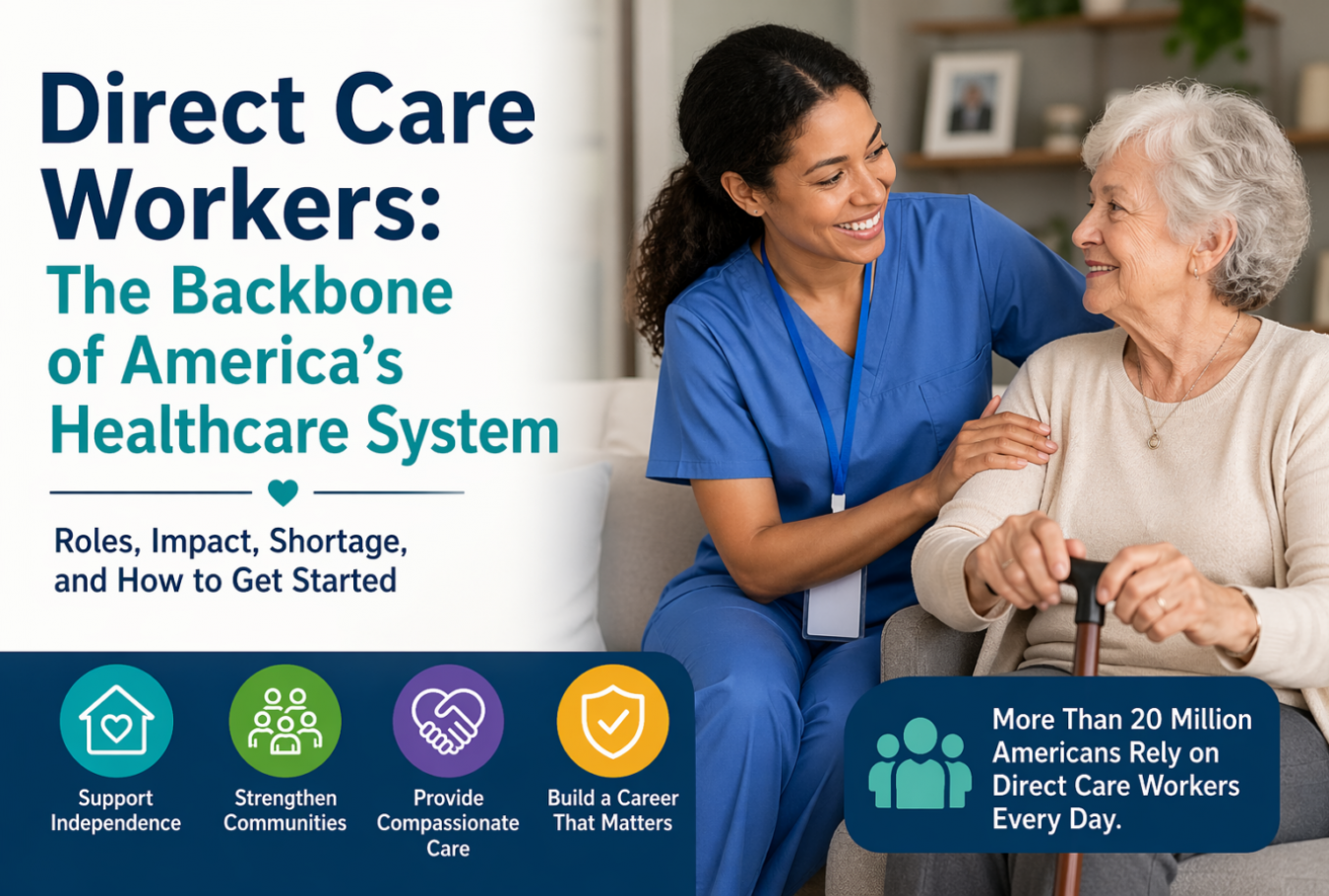
Direct care workers are trained caregivers who support elderly, disabled, or chronically ill individuals with daily tasks and basic health needs. This group includes PCAs, HHAs, CNAs, and similar roles. They provide hands-on care to millions of people and are essential to keeping healthcare systems functioning.
Most people think of doctors and nurses when they picture healthcare. But there’s a much larger group of workers who handle the day-to-day care that keeps the system running: direct care workers.
This includes roles like personal care assistants, home health aides, and nursing assistants. They spend more time with patients than anyone else and handle the kind of support that makes independent living possible.
This guide explains what direct care workers do, why they’re in such high demand, and what the role actually looks like in practice.
A direct care worker is a broad term for anyone who provides hands-on support to people who cannot fully care for themselves.
This includes:
These roles differ slightly, but they all focus on one thing: helping people manage daily life safely.
There’s a growing gap between how many people need care and how many workers are available to provide it.
Key reasons:
This isn’t a distant issue. It’s already happening across most regions.
For someone entering the field, this means steady demand and relatively strong job security compared to many other entry-level roles.
Here’s a realistic example of a typical shift:
You arrive at a client’s home in the morning. They may need help getting out of bed, washing, and getting dressed. You assist carefully, making sure they feel comfortable and safe.
After that, you prepare breakfast and check that they’ve taken any required medication (without administering it). You might sit and talk with them for a while, especially if they live alone.
Later, you handle small tasks around the house, maybe laundry or tidying up. If needed, you help them move around the house or accompany them to an appointment.
Throughout the day, you stay alert for anything unusual, like changes in mood, appetite, or mobility. Before leaving, you make sure everything is in order and report anything important.
The work is simple in structure, but it requires attention, patience, and consistency.
Without direct care workers, the healthcare system struggles quickly.
On the other hand, when care is consistent:
There’s a practical side and a personal side to this work.
Practical:
Personal:
That said, it’s not easy work. It can be physically and emotionally demanding, and not everyone sticks with it long-term.
The path into this field is straightforward:
Some employers hire without certification, but having it usually improves your chances.
Someone who provides daily care and support to people who cannot fully care for themselves.
Millions of workers fill these roles, and demand continues to grow due to aging populations.
High demand combined with low retention and challenging working conditions.
Direct care workers provide support and basic care. Nurses handle medical assessments, treatment, and supervision.
Yes. Many people enter the field with no prior healthcare background.
Direct care workers are not a small part of the system. They are the foundation that allows everything else to function.
If you’re considering this path, it’s worth being honest about both sides. The work is steady and meaningful, but it also requires patience, resilience, and consistency.
For the right person, it can be a strong starting point or a long-term career.
A career as a home health aide offers steady employment, genuine purpose, and a clear entry point into the broader healthcare field. With online training through NCOOA, you can earn your certification on your own schedule.