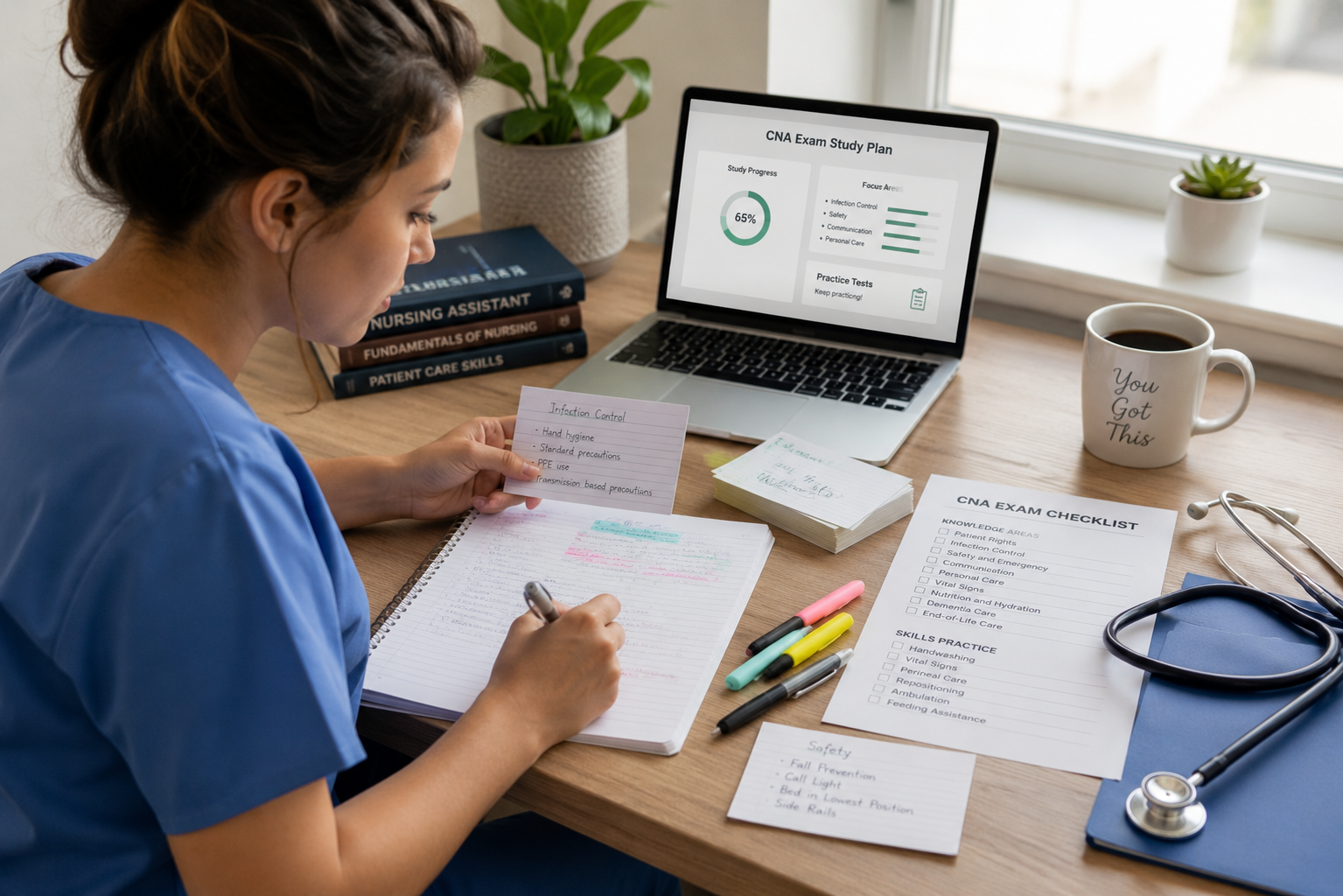
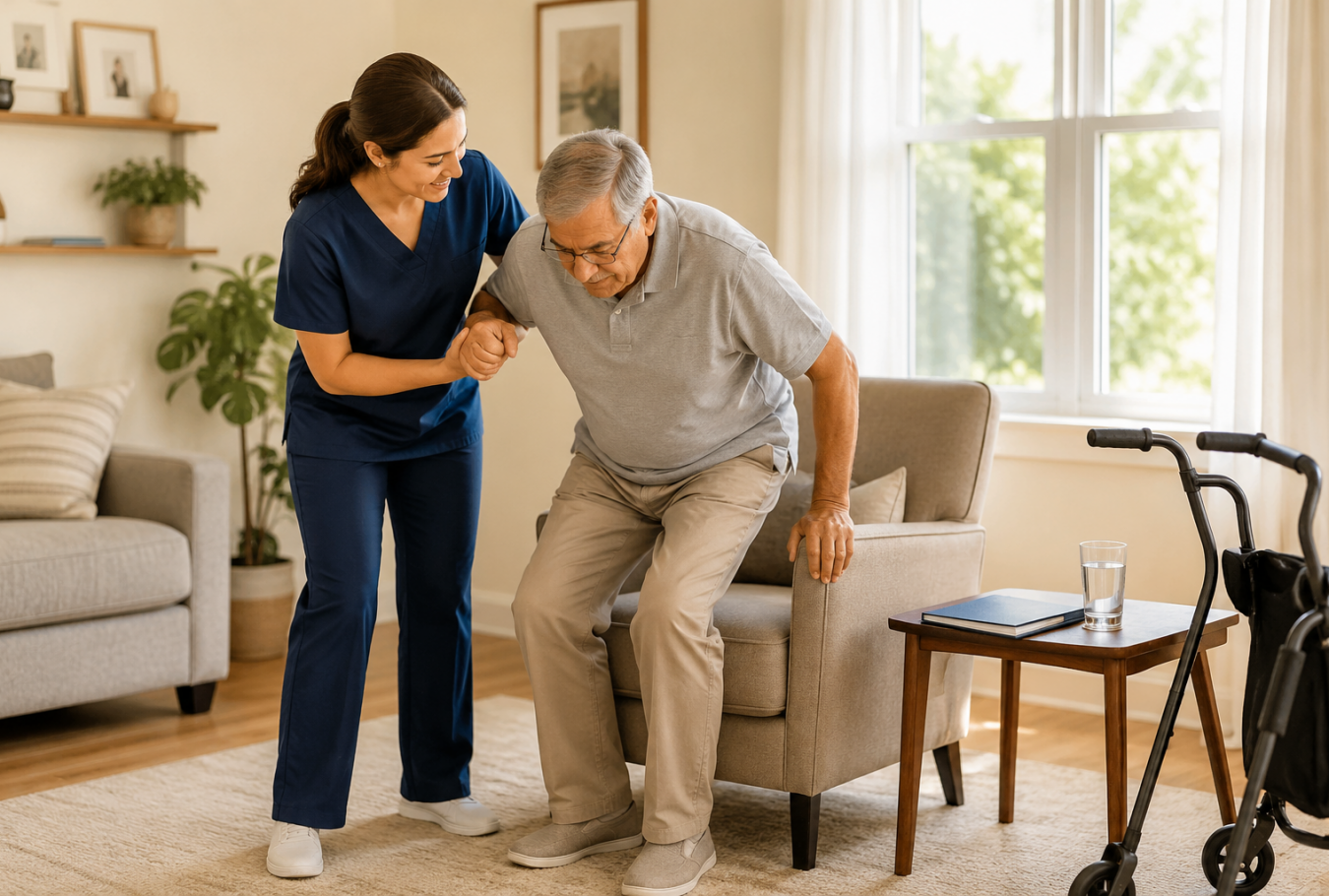
To become a caregiver in the U.S., choose the type of caregiving role you want, check your state’s requirements, complete caregiver training, and apply for entry-level roles with home care agencies, assisted living facilities, or private families. Most beginner caregiver jobs do not require a college degree, but many employers expect some form of training or certification.
Caregiving is a practical entry point into healthcare because you can often start with short-term training, build experience, and later move into higher-level roles such as home health aide, certified nursing assistant, licensed practical nurse, or registered nurse.
The exact path depends on the role:
| Role | Best For | Typical Requirement |
|---|---|---|
| Personal Care Aide / PCA | Non-medical daily support | Varies by state and employer |
| Home Health Aide / HHA | In-home care with basic health-related tasks | Federal training rules apply for Medicare-certified agencies |
| Certified Nursing Assistant / CNA | Facility-based care under nurse supervision | State-approved training and competency exam |
| Family Caregiver | Caring for a parent, spouse, or relative | Usually no formal license, but training helps |
A caregiver helps people who need support with daily living, safety, mobility, companionship, and basic personal care. Caregivers often support older adults, people with disabilities, people recovering from surgery, and individuals who cannot manage daily tasks alone.
Common caregiver duties include:
The key distinction is that most caregivers provide non-medical or limited-support care, not licensed nursing care. A PCA, HHA, and CNA may all support clients physically, but their scope of work, supervision, and legal requirements are different.
The best caregiver path depends on where you want to work, how much training you want to complete, and whether you want a non-medical or more healthcare-focused role.
A personal care aide helps clients with daily living tasks in a non-medical role. This is often the fastest entry point for people who want to start working in home care.
A PCA may help with hygiene, meals, mobility, companionship, errands, and household support. Requirements vary widely by state, employer, and funding source.
Choose PCA if you want:
A home health aide provides personal care and may also perform basic health-related tasks under a care plan. HHAs often work through home health agencies, including agencies that serve Medicare or Medicaid clients.
For Medicare-certified home health agencies, federal rules require at least 75 hours of training, including classroom and supervised practical training.
Choose HHA if you want:
A certified nursing assistant provides basic nursing support under the supervision of licensed nurses. CNAs often work in nursing homes, hospitals, rehabilitation centers, and assisted living facilities.
CNA requirements are more regulated than PCA or many HHA roles. Nursing assistants usually need to complete a state-approved training program and pass a state competency exam.
Choose CNA if you want:
A family caregiver provides care for a parent, spouse, grandparent, child, or other relative. This may be unpaid, but some states allow eligible family caregivers to receive payment through Medicaid consumer-directed care or waiver programs.
Choose family caregiver training if you want to:
You do not always need certification to become a caregiver, but many employers, agencies, and Medicaid-funded programs require training.
There is no single national caregiver certification that applies to every role. Requirements depend on:
The practical answer: even when certification is not legally required, caregiver training makes you safer, more confident, and more competitive.

Start by choosing between PCA, HHA, CNA, or family caregiving.
Ask yourself:
If you want the fastest entry point, start with PCA training. If you want a more structured healthcare role, consider HHA or CNA training.
Caregiver requirements change by state, so do not rely only on general advice.
Check:
This step matters because a role that requires formal training in one state may have lighter requirements in another.
A strong caregiver training program should teach practical skills you will use with real clients, not just theory.
Look for training that covers:
NCOOA’s online caregiver training is self-paced, available in 100+ languages, and includes free CPR and Basic First Aid training modules with relevant course bundles.
Some caregiving roles require a formal skills check.
For example:
Once you complete training, apply to employers that match your role.
Common caregiver employers include:
For a first caregiver job, home care agencies are often the easiest place to start because many hire entry-level workers and provide orientation.
Caregiving can be a starting point, not a dead-end role.
Common advancement paths include:
The best path depends on whether you want higher pay, more responsibility, or a more clinical healthcare role.
You can become a caregiver in a few days to a few months, depending on the role.
| Role | Typical Training Time | Notes |
|---|---|---|
| PCA | A few days to several weeks | Depends on state, employer, and Medicaid rules |
| HHA | Usually 2–6 weeks | Medicare-certified agencies require at least 75 hours of training |
| CNA | Usually 4–12 weeks | Requires state-approved training and exam |
| Family Caregiver | Flexible | Training is often optional but useful |
Online caregiver training can speed up the knowledge portion, but some roles still require in-person skills evaluation.
Yes, you can become a caregiver with no experience. Many entry-level PCA and home care roles are designed for beginners.
Employers usually look for:
Family caregiving, babysitting, volunteering, customer service, hospitality, and community work can all count as transferable experience.
A stronger approach is to complete caregiver training before applying. It gives you something concrete to show employers and proves that you understand the responsibility of the work.
You can complete foundational caregiver training online, but some roles still require in-person skills checks.
Online training is useful for learning:
Online training may not be enough for roles that require hands-on competency, such as CNA certification or some HHA positions. For those roles, expect a practical skills component.
Caregiver pay depends on role, state, employer, experience, and funding source.
According to the latest BLS data, home health and personal care aides had a median annual wage of $34,900 in May 2024. Nursing assistants had a median annual wage of $39,530 in May 2024.
Approximate pay comparison:
| Role | Typical Pay Level | Notes |
|---|---|---|
| PCA | Entry-level | Often lowest barrier to entry |
| HHA | Entry to mid-level | May pay more with agency, state, or specialized care experience |
| CNA | Often higher than PCA/HHA | Requires state-approved training and exam |
| Private caregiver | Varies widely | Pay depends on family, location, duties, and experience |
Home health and personal care aide jobs are also projected to grow 17% from 2024 to 2034, which is much faster than the average for all occupations.
Paid caregiving and family caregiving overlap, but they are not the same path.
If you want a paid caregiver career, you need to focus on employability: training, certification where required, background checks, availability, and professional communication.
If you are caring for a family member, the priority is safety, confidence, and sustainability. Training can help you avoid injury, understand care needs, and manage difficult situations more calmly.
Some family caregivers may also qualify for payment through state Medicaid programs, but eligibility rules vary by state.
New caregivers often underestimate how responsible the work is. Caregiving is not just “helping out.” It involves safety, privacy, communication, physical support, and emotional awareness.
Avoid these mistakes:
A good caregiver knows what to do, what not to do, and when to ask for help.
Caregiving is a good career if you want meaningful work, a fast entry point into healthcare, and long-term demand. It may not be the best fit if you want high starting pay, predictable emotional distance, or a desk-based role.
Caregiving can be physically and emotionally demanding. The entry-level pay is often modest. But it also offers strong job demand, flexible work settings, and a realistic path into healthcare without needing a college degree first.
No. Most entry-level caregiver roles do not require a college degree. Some employers may prefer a high school diploma or GED, but the most important requirement is usually role-appropriate training.
The fastest route is usually PCA training followed by applications to home care agencies. CNA certification takes longer because it requires state-approved training and a competency exam.
In some private-pay and entry-level roles, yes. However, many employers still require training, and Medicaid or Medicare-funded roles may have formal requirements.
Caregivers need patience, reliability, communication skills, physical awareness, empathy, and the ability to follow a care plan. They also need to notice and report changes in a client’s health, mood, mobility, or behavior.
A caregiver is the broad term. A PCA provides non-medical daily support. An HHA may provide personal care plus basic health-related support under a care plan. A CNA provides basic nursing care under licensed nurse supervision.
Yes, foundational caregiver training can be completed online. However, CNA training and some HHA roles require hands-on skills evaluation or in-person components.
Complete training, prepare a simple resume, apply to home care agencies, and highlight any experience helping family members, volunteering, or working in people-focused roles. Be clear about your availability, location, and willingness to learn.