If you’re thinking about becoming a Home Health Aide (HHA), you’re probably wondering what the job actually looks like day to day. What happens during a typical shift? Here’s an honest, detailed look at what HHAs do and the skills it takes to do it well.
A typical HHA shift can include many or all of the following:
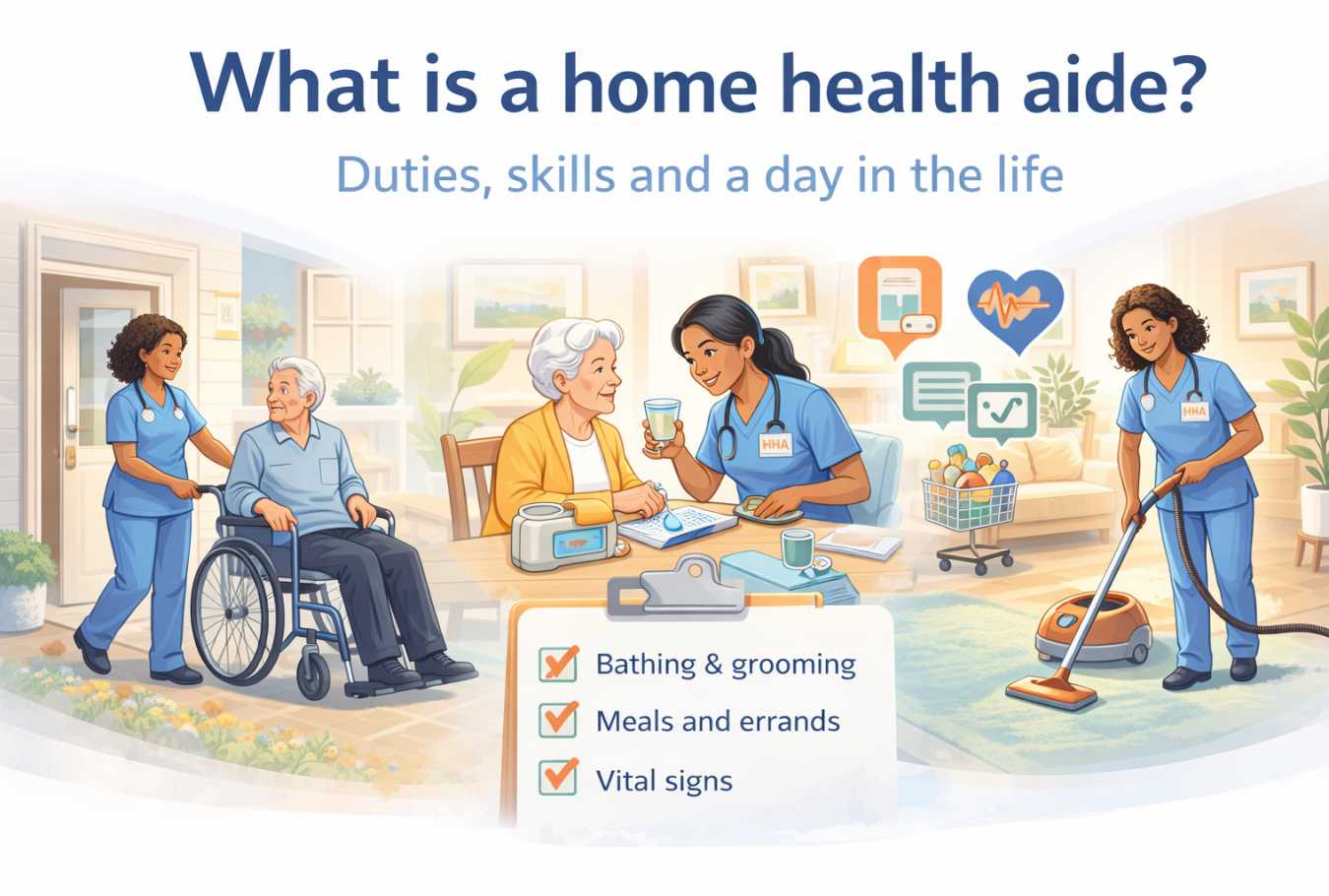
Personal care assistance. Helping clients bathe, shower, or wash up, assisting with dressing and grooming, oral hygiene support, and toileting assistance. These tasks require both physical skill and a genuine sensitivity toward the client’s privacy and comfort.
Mobility support. Helping clients safely move in and out of bed, chairs, and vehicles. This often involves transfer belts, walkers, wheelchairs, and proper body mechanics to prevent falls and injuries for both the client and the aide.
Vital sign monitoring. In many states, HHAs are trained to check and record blood pressure, pulse, temperature, and respiration rates, and to flag any significant changes to a supervising nurse or healthcare provider.
Meal preparation and nutrition. Planning and preparing simple, nutritious meals based on the client’s dietary needs or restrictions. This can also include grocery shopping, feeding assistance, and encouraging the client to stay hydrated.
Medication reminders. Reminding clients to take their prescribed medications on schedule. HHAs don’t typically administer medications themselves (that’s a task for licensed nurses), but they play a key role in keeping clients on track.
Light housekeeping. Keeping the client’s living space clean and safe. This includes laundry, vacuuming, washing dishes, and tidying up to reduce fall hazards and keep things hygienic.
Emotional support and companionship. Spending real time with clients, having conversations, going to appointments with them, and being a consistent presence they can count on. Social isolation is a serious health risk for elderly people, so the relational side of this job isn’t a bonus, it’s core to the work.
Documentation. Keeping a daily log of observations about the client’s condition, mood, appetite, and anything notable. Good notes keep the care team informed and protect everyone involved.
Being effective in this role goes beyond knowing the procedures. Strong HHAs also bring:
A note on emotional resilience
Working closely with clients who may be near the end of life, dealing with cognitive decline, or managing serious illness can take a toll. It’s important for HHAs to have personal support and know how to maintain healthy professional boundaries. The reward, though, is real: few careers offer the same depth of human connection and day-to-day impact as this one.
Is HHA training available online?
Yes. National Caregiver Organization offers a fully online HHA training course you can complete at your own pace, 24/7, with a full year of access from the day you enroll. The course covers everything described above in detail, along with CPR and Basic First Aid, and awards a certificate of completion when you pass the final exam.
A home health aide typically has formal training and certification that qualifies them to perform health monitoring tasks alongside personal care. A general caregiver may or may not have formal certification.
Home health aides primarily work in private homes, assisted living communities, and adult day programs.
Yes, the role involves regular physical tasks including assisting with transfers and being on your feet for most of a shift. Proper body mechanics taught during HHA training help reduce the risk of injury.
The Bureau of Labor Statistics projects that home health aide employment will grow by approximately 22 percent over the next decade, much faster than the average for all occupations.
A career as a home health aide offers steady employment, genuine purpose, and a clear entry point into the broader healthcare field. With online training through NCOOA, you can earn your certification on your own schedule.